

by Jenny Mitchell | JMitchell Resilient Homes
A new government report released this week puts a number on something California homeowners have been feeling for years: wildfires are now adding an average of $41 per month to residential PG&E bills, nearly 20% of the average bill and the cost is only going one direction.
The report, commissioned under California Senate Bill 254 and published by the California Earthquake Authority, calls wildfire risk "a recurring cost embedded in the state's economy." That phrase is worth sitting with. This isn't a crisis bill or a one-time charge. It's a permanent feature of what it costs to live in California and be connected to the grid.
The numbers behind that $41 are sobering. California's electricity rates increased 37% between 2020 and 2025 alone. PG&E raised rates 41% in the last three years and 101% over the last decade. From 2019 through 2023, the state's three major utilities were authorized to charge ratepayers $27 billion for wildfire prevention and insurance costs, costs that utilities are legally permitted to pass on to customers under California's inverse condemnation law.
Customers of Southern California Edison and San Diego Gas & Electric are paying similar premiums, 17% and 14% respectively on their monthly bills. The report warns these surcharges will continue to rise as wildfire seasons intensify.
What this means if you're building in California
The utility surcharge is one more line item in the true cost of living in a California home. It doesn't matter whether your house burned, you're paying for the fires regardless.
But there's a meaningful distinction between homes that contribute to the problem and homes that don't.
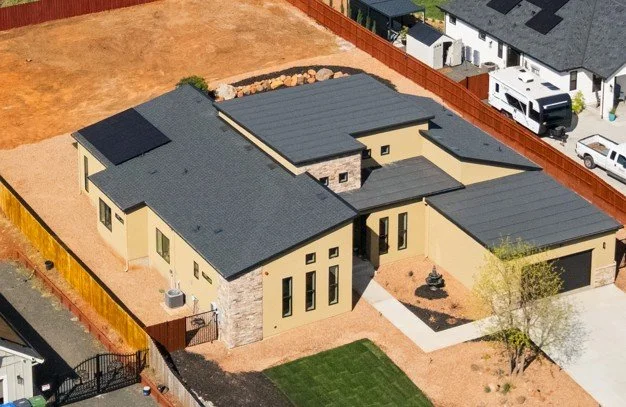
The 5093 Malibu Drive home I built in Paradise, location of the 2018 Camp Fire, was designed and built to achieve Net Zero energy performance, verified through California energy standards. The owned 4.2 kW solar system produces more energy than the home consumes. Read about the trueoperating costs of this home.
The wildfire surcharge is embedded in every California utility bill, including mine. But the R-22 to R-26 wall insulation in a concrete home reduces heating and cooling load so dramatically that even with the surcharge baked in, the numbers look nothing like a conventional home. The building envelope, reinforced concrete and insulating system, is doing work that the grid doesn't have to.
You can't opt out of California's utility system. But you can build a home that draws almost nothing from it.
Link to the article here ‘Climateflation’: California utility bills are 20% higher due to wildfires